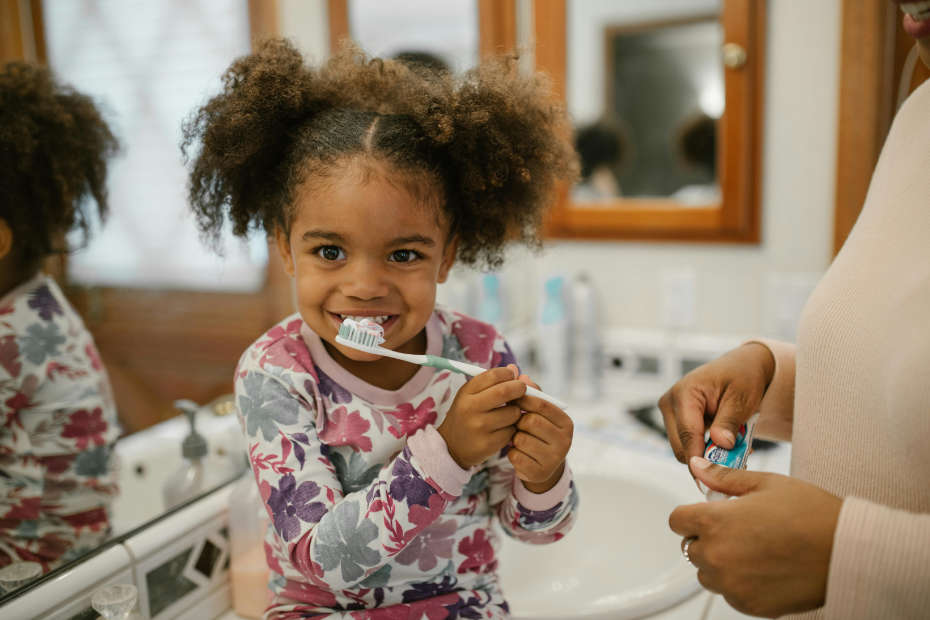
Looking after your child’s teeth isn’t a one-size-fits-all approach, as their dental needs change as they grow. What’s important is to build good habits as early as possible to make a big difference in long-term oral health and help prevent issues like decay, sensitivity, and anxiety about going to the dentist. In our blog, we’ll share tips on how to care for your children’s dental care by age.
0–2 Years: First Teeth And Early Habits
Even before teeth appear, it’s helpful to gently clean your baby’s gums with a soft, clean cloth. Once the first tooth comes through, begin to brush twice a day using a small, soft-bristled toothbrush and a smear of fluoride toothpaste.
At this stage:
- Start to brush twice daily (morning and bedtime)
- Use a smear of fluoride toothpaste (around 1000 ppm fluoride)
- Avoid letting your baby fall asleep with a bottle of milk or juice
- Try to make brushing part of a calm, consistent routine
Even though baby teeth are temporary, they play an important role in speech development, chewing, and guiding adult teeth into place.
3–5 Years: Building Independence
As your child grows, they’ll want to start brushing on their own, which is great for their independence; however, they’ll still need your help. This is the stage where habits really start to form.
Focus on:
- Brushing twice a day for two minutes
- Using a pea-sized amount of fluoride toothpaste
- Supervising brushing to ensure all teeth are cleaned properly and the correct technique is used
- Introducing simple explanations about why brushing matters
You can also start making dental care more engaging; for example, using timers, songs, or reward charts can help keep them motivated.
6–9 Years: Developing Consistency
At this age, most children will begin brushing more independently, but supervision is still key to make sure they’re brushing properly.
Crucial tips:
- Continue brushing twice daily with fluoride toothpaste
- Introduce flossing if teeth are touching closely
- Encourage them to spit out toothpaste rather than rinse heavily, as rinsing removes the fluoride on the tooth
- Book regular dental check-ups to monitor development
This is also a common age gap for losing baby teeth and growing adult teeth, so you may notice gaps and changes in their mouth. This is completely normal. Another way to make this fun for your child is to introduce the tooth fairy!
10–12 Years: Strengthening Habits
As children move into their pre-teen years, oral hygiene should become a solid routine rather than something they’re reminded about constantly.
At this stage:
- Ensure consistent brushing twice a day continues
- Encourage flossing or interdental cleaning
- Monitor sugary snacks and drinks, especially fizzy drinks and energy drinks
- Reinforce the importance of regular dental visits
This is also a key time for orthodontic assessments, as many children may need braces, Invisalign or aligners.
Teen Years: Maintaining Long-Term Dental Health
Teenagers often take full responsibility for their oral hygiene at this stage; however, lifestyle habits can start to impact their teeth more significantly.
Focus on:
- Continuous twice-daily brushing with fluoride toothpaste
- Flossing regularly to prevent gum issues
- Reducing sugary and acidic drinks
- Avoiding habits like chewing pens or grinding teeth
- Keeping up with dental check-ups
Teenagers may also become more conscious of their smile, so this is a good time to reinforce confidence and the benefits of long-term oral care to prevent any dental issues in the future.
Building Lifelong Habits
Good dental care in childhood sets the foundation for a healthy adult smile. The earlier children learn proper brushing and flossing techniques, the more likely they are to maintain them into adulthood.
Key takeaways:
- Start early, even before all teeth come through
- Supervise brushing for younger children
- Use fluoride toothpaste consistently
- Keep dental visits regular
- Make oral care a normal, daily habit and emphasise its importance.
By following the tips in our blog, you can confidently support your children’s dental care by age, ensuring they develop the correct habits at each stage. If you’re ever unsure about your child’s dental development or routine, a dental professional can offer tailored advice and reassurance at every stage. If you have any questions about your little one, feel free to contact our expert and friendly team today to book in an appointment.